ON BECOMING TRUSTWORTHY
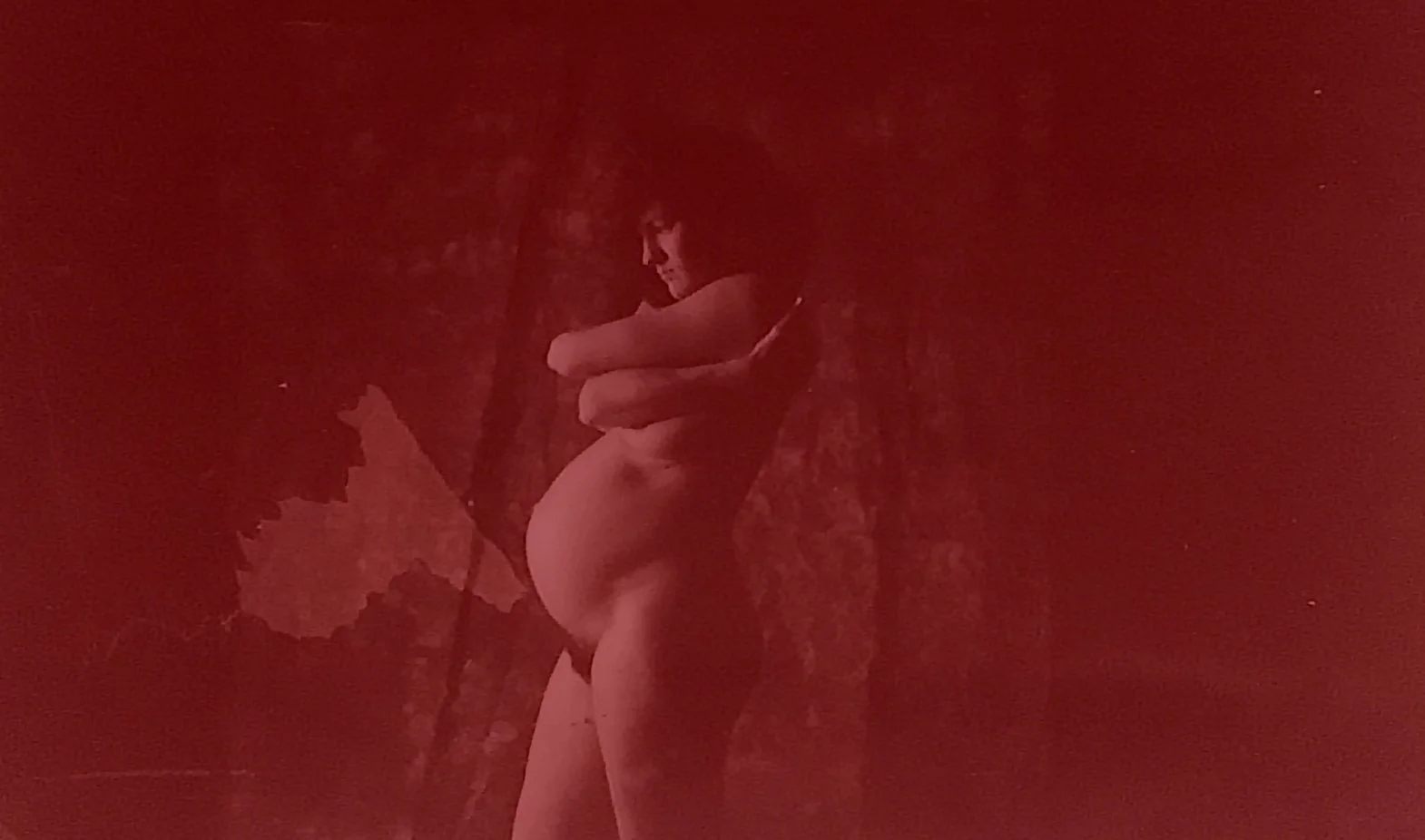
For years, I had believed that freedom meant unbridled sexual expression—that to belong with just one person was to risk disappearance. My marriage was an experiment in breaking conventions, in dismantling scripts, in testing the limits of tolerance within a marriage, without apology. I was proud of that inquiry, and I remain proud of it. It taught me more about power, pleasure, jealousy, and agency than any theory ever could.
I found myself, older and quieter, imagining something I had spent years resisting: a single partner, fully available, mutually chosen. It was not visible to me yet, but I wondered about a life shaped not by experiment, but by another kind of commitment. It meant reinventing myself and my values.
I remember thinking that in the future, sex might still matter deeply to me, but perhaps it would no longer need to be the organizing principle of intimacy. Perhaps there were other forms of communication—attention, tenderness, shared domestic rhythms—that could be just as radical, just as authentic. Perhaps authenticity could exist without the chaotic undertow of honoring all sexual desire.
The word that surfaced surprised me: trustworthy. I had thought of myself as trustworthy, but my behavior had not borne that out. I wanted to become truly trustworthy–to myself, and to a future, vaguely imagined partner.
Perhaps loving one person was not a retreat into convention. Perhaps it was a different discipline. It would require a revision of the self, a willingness to be accountable and emotionally present in ways that sexual freedom alone had not demanded. Trustworthiness, I realized, would be the basis of a different kind of relationship.
The years since I decided to become trustworthy have been an education in that discipline. I live now in a long-term monogamous partnership that feels grounded and mutual, a life I keep largely private. I am grateful for it in ways I could not have imagined when I was younger, when identity felt like something that could be lost by enmeshment in a fully shared life.
Looking back, I see my earlier life not as a mistake or a phase to disavow, but as a necessary chapter. Desire, hormones, politics, and personal history converged in ways that carried me further than I would choose today. And that, too, is part of my story. I don’t regret the experiment. Everything still feels like an experiment. I regret only the ways I sometimes mistook intensity for love, and fantasy for reality.
What remains constant across these chapters of my life is the inquiry: how we love, how power moves through intimacy, how scripts can be rewritten over a lifetime. I am less interested now in declarations of honesty than in actual evolution, which I’ve learned is incremental. Less interested in freedom as spectacle, more in freedom as practice.
At sixty-six, I feel more at peace with life’s uncertainty and temporality. My heart is still open, but flung less wide, held more deliberately. My memoir is about breaking conventions, and what follows is a quieter story: how to live after breaking things, how to choose, how to stay.