ON SAYING I’M SORRY TO MY SONS FOR MY OPEN MARRIAGE
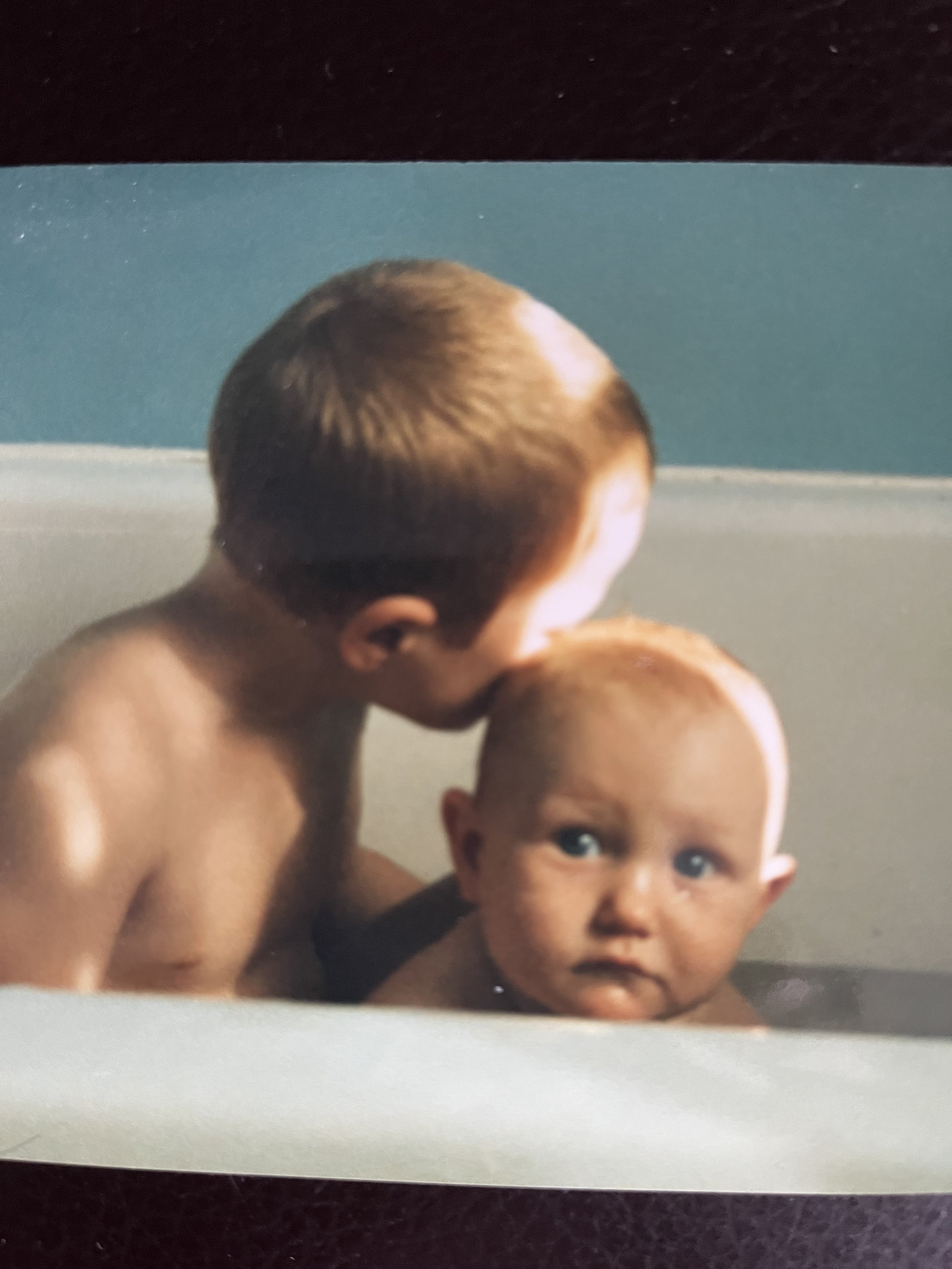
I wrote a memoir about my non-monogamous marriage. I spent ten years or more working on telling that story, weaving in bits about my adolescence and sexuality, but focused on the tale of my thirty years with my now ex-husband, who chose to be called Henk in the memoir. Ten years later, I am coming to terms with the reality that my healing is not complete. That only now, ten years after our divorce was finalized, as a sober person with kids all now in their thirties, am I resourced enough to attend to the real healing. It is my hope that through this difficult process we can all heal.
Every family has dysfunction, and every family has beauty. I believe that our sons, more than Henk or our daughter or me, live with the repercussions of our open and often unstable marriage. Only now am I able to accept that the dishonesty and sexual confusion between Henk and me had an impact on the kids’ then, and on their romantic choices as adults.
My grief can only be mitigated by a true self-healing, one in which I peel back memory to recall the trauma that shaped me, that broke my trust in men, and that propelled me in search of true love. My style of love was marred by the belief that neglect and cruelty were inevitable. I want to confess honestly to my sons the truth of who their mother was and is, the relationship they were born into, and ways that I so often left them to their own devices, physically present but abandoning them high on pot or other substances, or silently obsessing on lovers, both fantasy and real. I rationalized these escape plans as necessary for my survival.
I did survive, and everyone survived. There were many, many good times in our family. But the damage is also real. And the final stage of healing myself and my relationship with my sons is to confess the truth. I now believe it is the only way for us to grow forward, unburdened by the sins and patterns of the past, free to experience life in a new way.
When I met Henk, I acted out my need to replace my father, who had once adored me but later betrayed and abandoned me. This replacement project, tried with other men before I met Henk, meant an unnatural obsession with pleasing him, elevating him and his needs above mine in spite of my strong, feminist identity.
When Henk expressed love yet broke the trust by sleeping with other women, it only confirmed the pattern of abandonment. I remained obsessed with him, believing that I could withstand any test. However, when I felt the threat of being replaced, I reacted by reaching for new objects of sexual obsession to efface my pain.
Henk and I justified our rejection of and disbelief in monogamy as a form of freedom. Literature and art were our shared passions, and through our various heroes and icons we developed a convoluted ethos that held sexual exploits and pleasure above caring for each other.
Though both Henk and I considered ourselves artists, we had three kids. We led an outwardly normal-looking life, albeit populated by other artists who were integral to our lives, who were less fettered by domestic burdens. Parties were frequent and boundaries were loose.
Once the kids were old enough to understand what was expected of married couples, Henk and I tried to keep our outside relationships undercover. Until our youngest son was 18. By then Henk and I were living out-loud polyamorous lives, and not surprisingly, so were the kids, and all their friends. We believed we were part of a revolution.
Polyamory with Henk lasted until our divorce, the final act in our 30-year relationship. The divorce broke me open, forcing me to face my aloneness. After a self-paced master class in polyamory, involving so many lovers I can’t even remember all of them, I was miserable. I took inventory of the history of my love relationships, before, during and after Henk, and came to realize that I had consistently chosen men whose wounds mirrored mine, and their responses complemented my secure-anxious attachment style with anxious-avoidance, creating a terrible yet predictable imbalance. I was always chasing these avoidant men, who were often narcissists, and trying to take care of them. Meanwhile, they felt smothered and kept their distance by pursuing other lovers. Only when I saw this pattern, not just one individual person to whom I could assign blame, could I begin to work on changing it.
About a year after I began this deep internal work that included changing the kind of person I was attracted to (from anxious avoidant men to truly secure attachers), I met my current partner, with whom I now share a mutual, monogamous, loving relationship. Interestingly, Henk also found a new, monogamous life partner.
When I met my new partner, I took a five-year break from the memoir about my marriage, believing that my healing required me to put that long and often painful chapter behind me. The last thing I needed in my joyous new relationship, I thought, was to rehash my marriage.
But the memoir called me back. I could not start another writing project until I finished it. I thought that meant returning to a chronological retelling of that 30-year, unusual open marriage, to share the lessons learned. I restricted the story to what actually happened, ending with my realization that I needed to change.
The first editor who read my manuscript asked two searing questions: How did the trauma of my father’s violent rejection of me when I was sixteen affect my lifestyle choices, i.e., various forms of non-monogamy, and how did those choices impact our kids?
To the first question, I thought I had mined that old trauma fully, but began to realize perhaps I hadn’t. Perhaps I had told that story too many times in therapy, and conveniently linked it to my difficulty sharing my writing with others but not how it affected my romantic choices. As for the second question, I had consciously kept the kids as far out of the frame as possible in the memoir. Just writing those words now–that I wanted to protect my kids from the reality of our lifestyle choices by simply leaving them out, sends up a red flare. “This is a family story,” the editor said. I felt the flare, but thought it simply meant making a few minor additions. I could not yet connect my own trauma to how it later affected my kids.
But these two questions were landmines that exploded underground simultaneously, then blew my soul apart.
Waves of grief and regret rage through me, the aftermath seeping like lava into all parts of my being, burning holes of revelation through which the light now pours. Truly healing myself, and the relationships with my sons, is now the most urgent thing I can possibly do before I die, and the subject of my next book.